... is a day to wonder what this might mean.
I'm well past midlife but I can definitely get behind knitting, birdwatching, and reading with cats!
Striving to be highly reasonable, even in the face of unreasonableness. Reading, knitting, and some alcohol may help.
... is a day to wonder what this might mean.
I'm going down to see Nugget tomorrow and have bagels with Jess but other than that, I've got a blissful weekend to myself. I hope you're anticipating an equally satisfying weekend!
I'm joining Kat and the Unravelers with some SIPs (Socks In Progress). It's been too d*&n hot to do much else beside sit in front of the air conditioner and knit small things. There were several hours of awfulness where I had to pick snow peas in John's garden at Ryan's but it was as terrible as you might imagine so I won't dwell on that.
The blue and green striped one is ready for me to start on the toes, and the rainbow one is ready for the heel flap and turn if I can gather some gumption. Today it's supposed to reach 100 again, but motivation might be just around the corner tomorrow when the temperatures (hopefully) begin to drop.
I read only one book this week, but it was a memorable four-stars. Ocean Vuong’s The Emperor of Gladness is a tender, quietly
powerful novel that explores the fragile beauty of human connection, the
resilience of the working class, and the long, difficult journey toward
self-worth. This is Vuong’s first full-length work of fiction since On Earth We’re Briefly Gorgeous, and once again he brings his signature lyrical style to a narrative that is emotionally rich and deeply humane.
At
the heart of the novel is Hai, a 19-year-old Vietnamese American who
survives a suicide attempt only because it’s interrupted by Grazina, an
elderly widow with dementia and an unshakable sense of presence. In a
move that serves both of them, Hai agrees to become her caretaker. What
follows is not a conventional redemption arc, but a deeply nuanced
exploration of grief, shame, dignity, and the strange, sometimes
stubborn ways people come to care for one another.
Vuong’s prose
is spare but luminous, filled with quiet observations that land like
revelations. He gives dignity and emotional texture to the lives of
people often overlooked—immigrants, the poor, the aging, the young who
are barely hanging on. The relationship between Hai and Grazina unfolds
with the slow trust of real life, becoming a kind of found family that
neither of them expected but both desperately need.
Some readers
might find the narrative more reflective and "dreamy" than event-driven,
but that’s part of its strength. Vuong doesn't seem interested in
melodrama—he's invested in emotional truth. And in that sense, this
novel delivers in every line.
The Emperor of Gladness is a
poignant meditation on what keeps us alive, and who we might become
when someone—unexpectedly, stubbornly—believes we are worth saving.
Quietly devastating and deeply compassionate, this is a novel to read
slowly, and remember long after.
What are you making and reading this week?
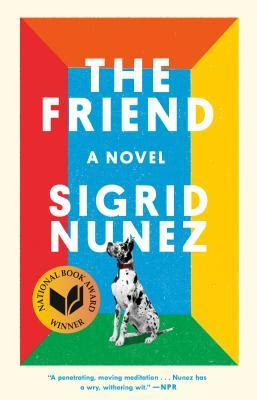
We’re thrilled to announce the Read With Us summer selection: The Friend by Sigrid Nunez!
Winner of the 2018 National Book Award for Fiction, The Friend is a deeply moving and quietly powerful novel about grief, literature, and the unexpected ways love and healing enter our lives. At the center of the story is a woman mourning the sudden loss of her closest friend—and the large Great Dane he left behind. What begins as an act of reluctant caretaking becomes a meditation on loss, solitude, the creative life, and the profound companionship of animals.
Nunez’s writing is spare, elegant, and laced with both literary reflection and emotional honesty. It’s the kind of book that feels intimate and expansive all at once—a perfect choice for thoughtful discussion.
Why we chose The Friend
Kym, Carole,
and I will be talking about the book, giving additional information,
and doing promotional posts through July. Discussion day for The Friend is scheduled for Tuesday, September 16, 2025 at 7:00 pm Eastern time, so mark your calendars. We'll ask questions on our blogs that day and then host the always fun, educational, and entertaining Zoom discussion.
Whether you're new to Sigrid Nunez or already a fan, we hope you'll Read With Us and discover (or revisit) this beautifully written novel.
... is a day when you just want to lie in front of the air conditioner with a wet washcloth on your forehead. Our weather this week looks quite warm too d**n hot, like much of the rest of the country:
I hope your Monday is a good one and you can find a way to stay cool this week!
It's the third Thursday of the month so I'd like to welcome you to A Gathering of Poetry. Today I made sure I didn't forget about A Gathering of Poetry like I did last month, and this month Billy Collins came to my rescue.
I had a lime tree that died and I recently bought a new one. It's outside and growing well and I recently caught myself thinking, "I just love this little lime tree." A few days ago I was washing my hands with a bar of Ivory soap and found myself thinking, "I really love the smell of this soap." Thankfully, Billy Collins had already written a poem about these moments.
Aimless Love
by Billy CollinsThis morning as I walked along the lake shore,
I fell in love with a wren
and later in the day with a mouse
the cat had dropped under the dining room table.In the shadows of an autumn evening,
I fell for a seamstress
still at her machine in the tailor’s window,
and later for a bowl of broth,
steam rising like smoke from a naval battle.This is the best kind of love, I thought,
without recompense, without gifts,
or unkind words, without suspicion,
or silence on the telephone.The love of the chestnut,
the jazz cap and one hand on the wheel.No lust, no slam of the door—
the love of the miniature orange tree,
the clean white shirt, the hot evening shower,
the highway that cuts across Florida.No waiting, no huffiness, or rancor—
just a twinge every now and thenfor the wren who had built her nest
on a low branch overhanging the water
and for the dead mouse,
still dressed in its light brown suit.But my heart is always propped up
in a field on its tripod,
ready for the next arrow.After I carried the mouse by the tail
to a pile of leaves in the woods,
I found myself standing at the bathroom sink
gazing down affectionately at the soap,so patient and soluble,
so at home in its pale green soap dish.
I could feel myself falling again
as I felt its turning in my wet hands
and caught the scent of lavender and stone.
====
"Aimless Love". Collins, Billy. Nine Horses: Pan Macmillan and Random House Trade Paperbacks, 2003.
You can read more about the poet here and here.
====
You are invited to the Inlinkz link party!
Click here to enterI'm joining Kat and the Unravelers with the slightly sad tale of a broken needle. I did order a bamboo circular so I could attempt the four-stitch decreases in Soft Current (ravelry link) on needles that aren't too slippery, but they arrived with a broken point in the sealed package, so I've ordered a different type. The replacement should arrive sometime this week, but I'm not sitting around waiting impatiently. I cast on for a pair of socks with some self-striping yarn in my favorite colors. I'm really enjoying working on them and am heading down the foot on the first sock.
I finished two books this week. The first is entitled Bad Company: Private Equity and the Death of the American Dream. I wasn't sure this was a book for me when I was first offered the ARC, but I decided it was worth reading to educate myself about what private equity firms really are and how they operate.
In Bad Company, Megan Greenwell pulls
back the curtain on the destructive influence of private equity firms,
whose sole mission—to generate maximum profit for investors—often comes
at immense human cost. With sharp reporting and deep empathy, Greenwell
explores how this opaque, powerful industry has reshaped American life
in ways most of us aren't aware of until it’s too late.
From
retail chains gutted for parts, to nursing homes where patient care
declines as profits rise, to newsrooms stripped of staff and mission,
Greenwell brings the consequences of financial chicanery down to the
ground level—where ordinary workers and communities are left to pick up
the pieces. The sections on housing and health care are particularly
chilling, showing how private equity firms insert themselves into
essential services, extract wealth, and then leave ruin behind.
What
makes this book stand out is its focus on people—not just policies or
profit margins. Greenwell never loses sight of the lives destroyed,
dignity eroded, and communities disrupted when decisions are made purely
in service of capital.
While some readers may wish for more
policy prescriptions or structural analysis, Bad Company succeeds as a
necessary, accessible, and often enraging look at an industry that
thrives in the shadows. It’s a wake-up call to anyone who’s ever asked,
“Why does everything feel like it’s getting worse?”
Thank you to NetGalley and Dey Street Books for providing me with a copy of the book. It was published on June 10, 2025.
The second book, The Beast in the Clouds, is a fascinating
blend of adventure, history, and science, chronicling a little-known
chapter in the lives of the Roosevelt brothers—Theodore Jr. and
Kermit—on their ambitious and dangerous 1920s expedition to China in
search of the mythical giant panda. Nathalia Holt brings a sharp eye to
the historical detail, placing this journey in the broader context of
Western imperialism, scientific exploration, and family legacy.
The
book shines when it digs into the Roosevelt family dynamic,
particularly the pressure the brothers felt to live up to their father’s
name. Their psychological struggles, especially Kermit's lifelong
battle with depression, are handled with nuance. Holt also gives us a
vivid portrait of the expedition itself, from treacherous mountains to
cultural misunderstandings, and paints a complex picture of China at a
moment of political upheaval.
That said, the pacing occasionally
lags, particularly in the midsection, and the book sometimes feels torn
between being an adventure story and a historical analysis. I also would
have appreciated more in-depth coverage of the ecological and
zoological significance of the panda, beyond its role as a symbol or
trophy.
Still, Holt’s research is impeccable, and her prose is
accessible and often poetic. This is a compelling story about obsession,
legacy, and the fine line between scientific curiosity and colonial
arrogance. A great read for fans of narrative nonfiction and those
curious about forgotten corners of exploration history.
Thank you to Atria and NetGalley for providing me with a copy of this book. It will be published on July 1, 2025.
What are you making and reading this week?